Groundhogs (woodchucks) are powerful diggers that can undermine foundations, patios, retaining walls, and sidewalks. A single burrow system can have over 60 feet of tunnels and multiple exits. TriState Wildlife offers humane groundhog removal and permanent solutions. We trap, relocate, assess burrow damage, and install exclusion barriers to prevent re-establishment. All exclusion work is backed by a full guarantee.
"TriState trapped it in two days and installed a barrier around the whole foundation. Problem solved."
— Phil C., Mount Kisco, NY
How We Work
Humane Groundhog Removal Process
We start with a thorough inspection to locate all burrow entrances, assess proximity to foundations and structures, and determine how extensive the setup for trapping will need to be. Groundhog burrows typically have two to five openings, including hidden escape holes.
Burrow-Targeted Trapping: No Bait, No Guesswork
We don't use bait when trapping groundhogs. Most companies do, and it's worth understanding why that's a problem.
Baited traps attract every raccoon, opossum, squirrel, and skunk in the neighborhood, not just the groundhog under your deck. Groundhogs are notoriously difficult to capture with baited traps, so you're likely to pay for a dozen non-target animals before the actual groundhog is ever caught, if it's caught at all. Most companies charge per animal removed, and bait-based trapping conveniently pads that billing model with catches that have nothing to do with your problem.
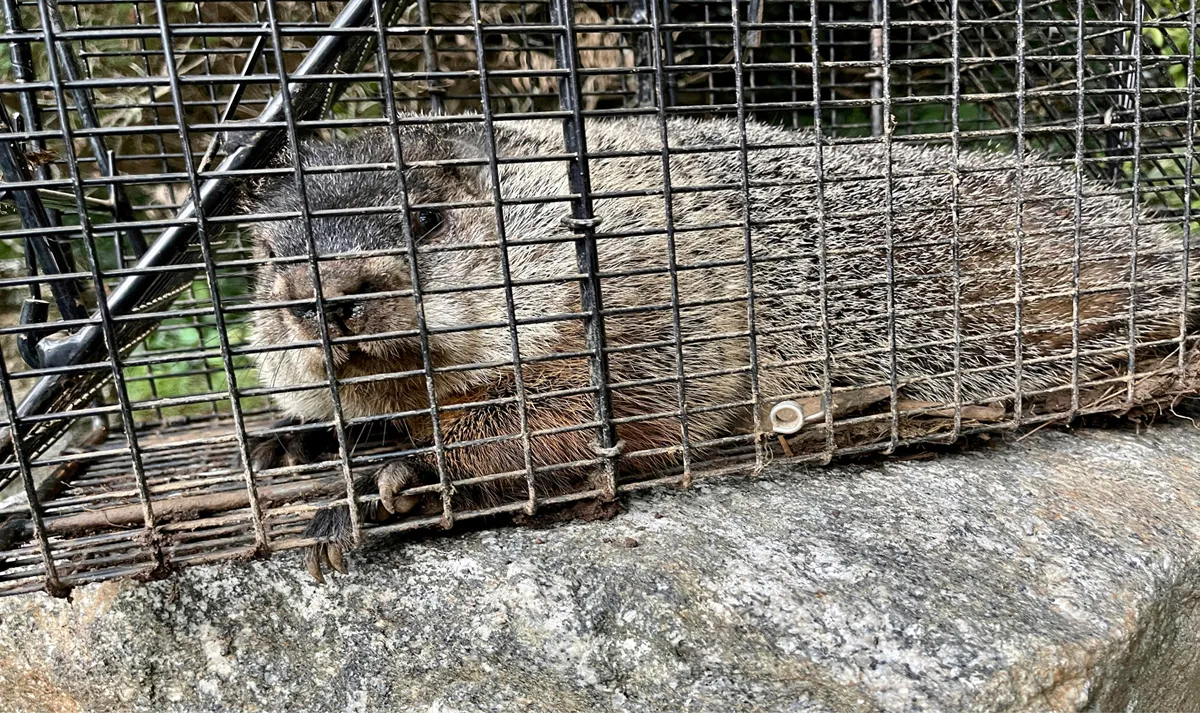
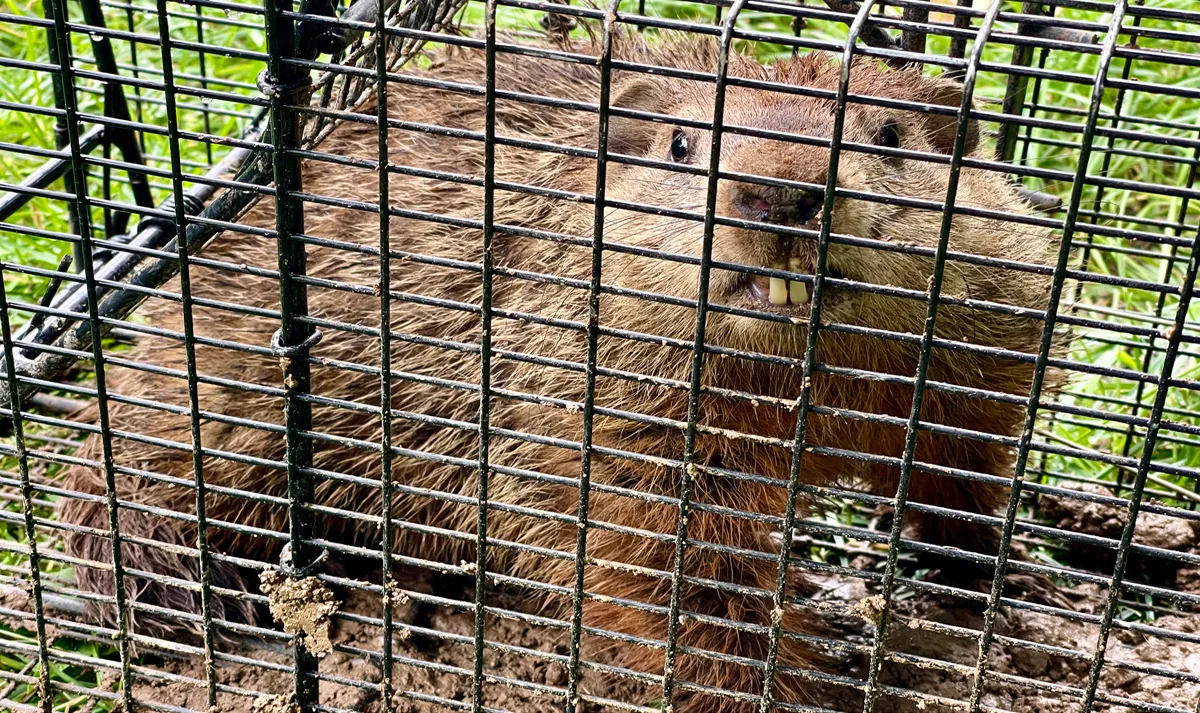
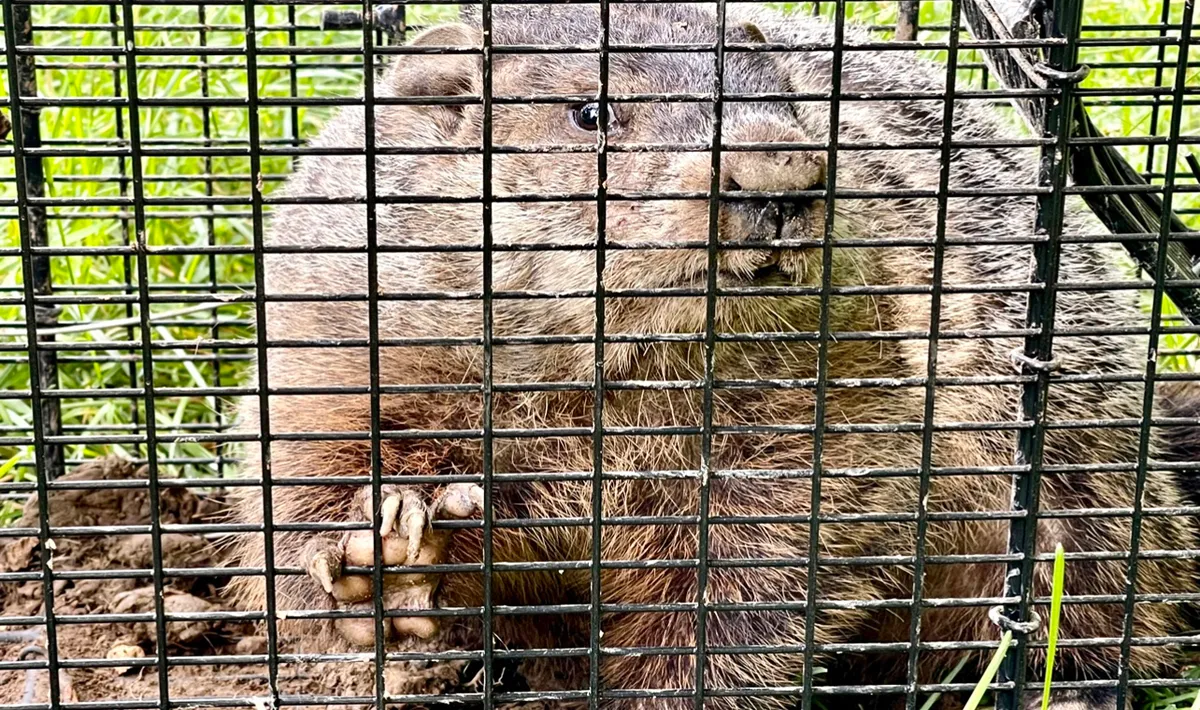
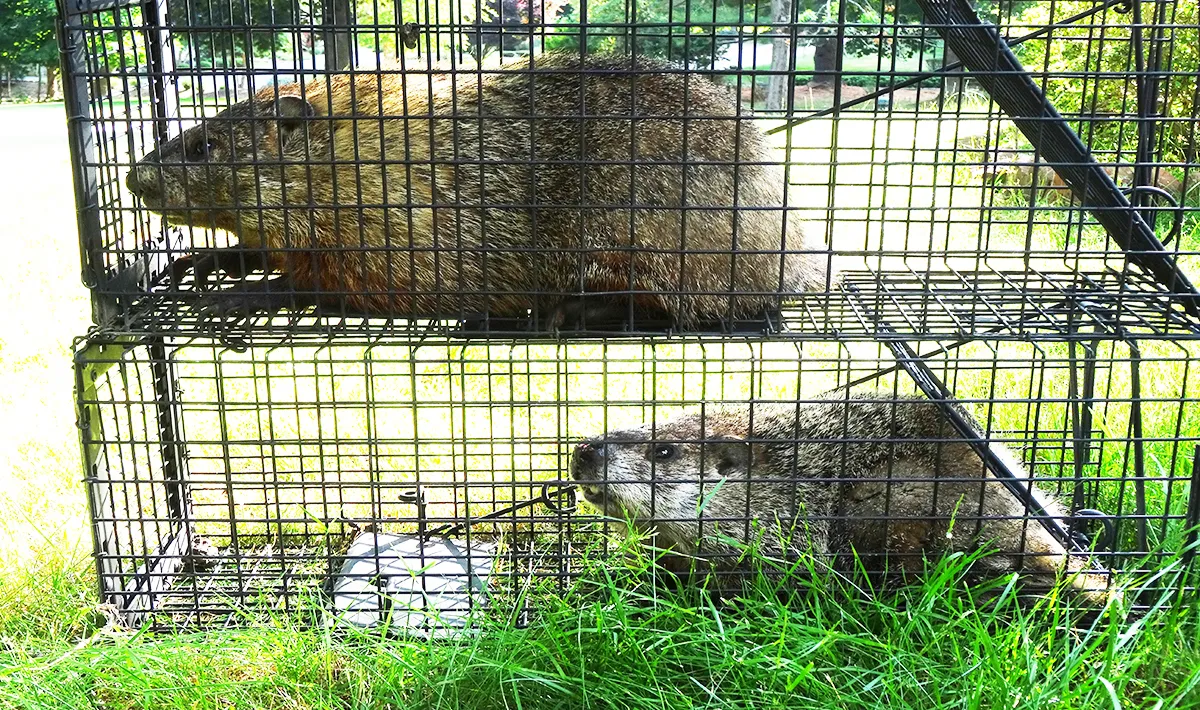
We take a different approach. We use professional-grade traps installed directly over active burrow entrances so that groundhogs must pass through them to enter or exit. We use no bait that draws in outside animals, so that only the animals using that specific burrow are captured. Occasionally another species may be co-habiting the burrow with the groundhogs, and if so, we'll catch them too. But you'll know that every animal we remove was actually part of your problem.
These traps are a significant investment. They are expensive and prone to damage, which is why most companies avoid them. We use them because they work.
Cellular Data Camera Monitoring
Each trap is monitored with a cellular data camera. The moment a trap closes, we're notified. This matters because a closed trap temporarily blocks the burrow entrance, so it allows us to respond promptly to keep the process moving efficiently and minimize stress on the captured animals. We come out within 24 hours, remove the animal, and reset.
Watch Out for "Pay-by-the-Day" Trapping
Some companies offer flat-rate pricing for a set number of days. Their offer is "we'll leave traps out for X dollars for X days." This sounds straightforward, but it rarely delivers results. These operators often don't use burrow-targeted traps, and in some cases don't even bait them. You pay for time, not results. When the days run out and nothing has been caught, you're either asked to pay for more days or left to deal with the problem yourself. They never guaranteed removal, only that traps would sit on your property for a period of time.
After Removal: Structural Assessment and Exclusion
Once the groundhogs are gone, we will sometimes recommend that sinking structures be reset prior to exclusion. However, in many cases exclusion work can commence as soon as the burrow is empty.
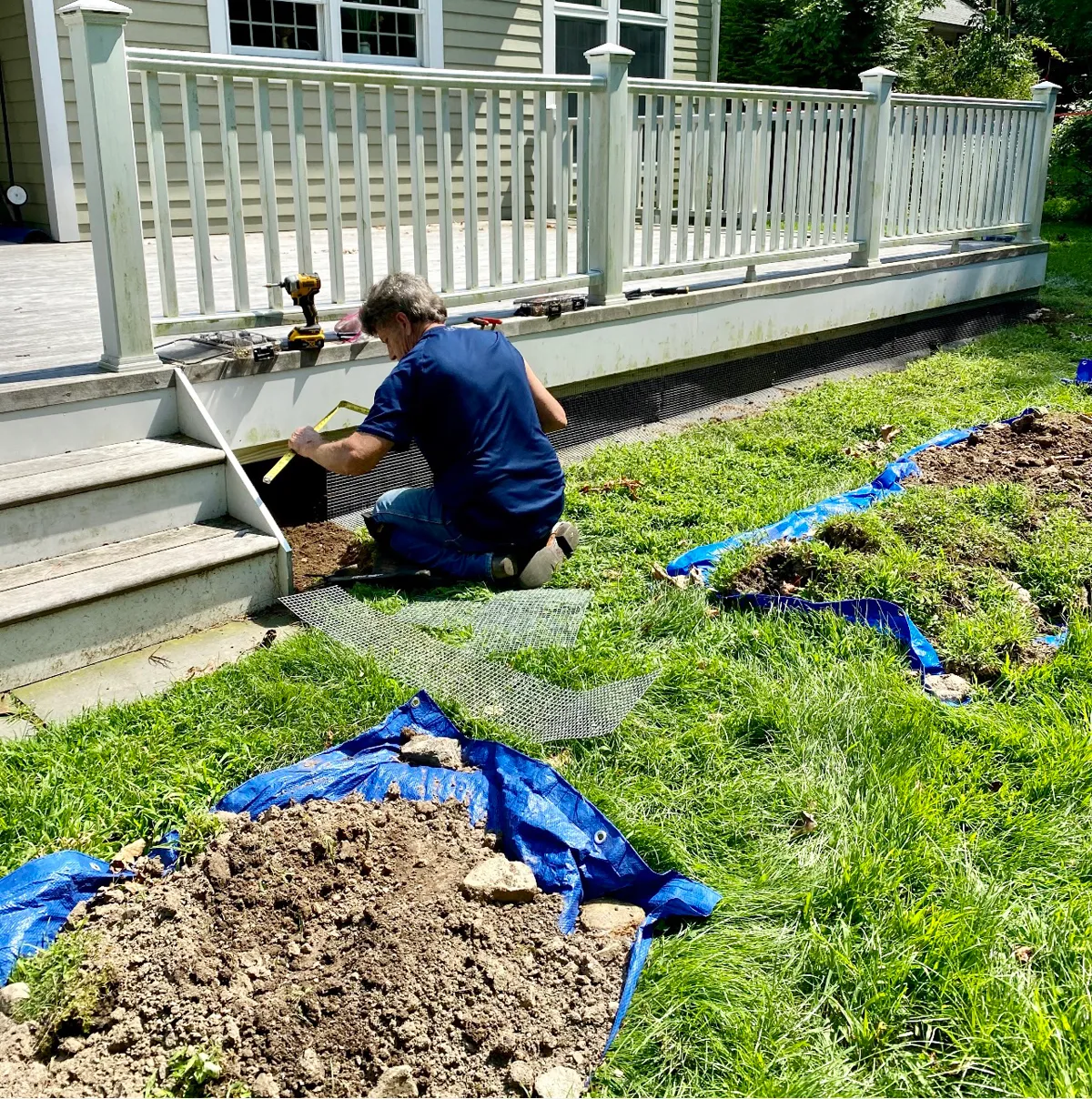
We install permanent exclusion barriers around vulnerable structures to prevent new groundhogs from digging in. These are often painted to color match the structure if the barriers are visible above ground, to ensure they protect the current aesthetics.
All exclusion work is backed by a 10-year written guarantee. If groundhogs enter through any area we protected, we come back at no cost and solve the issue.
Our Groundhog Work
Photos from Recent Jobs
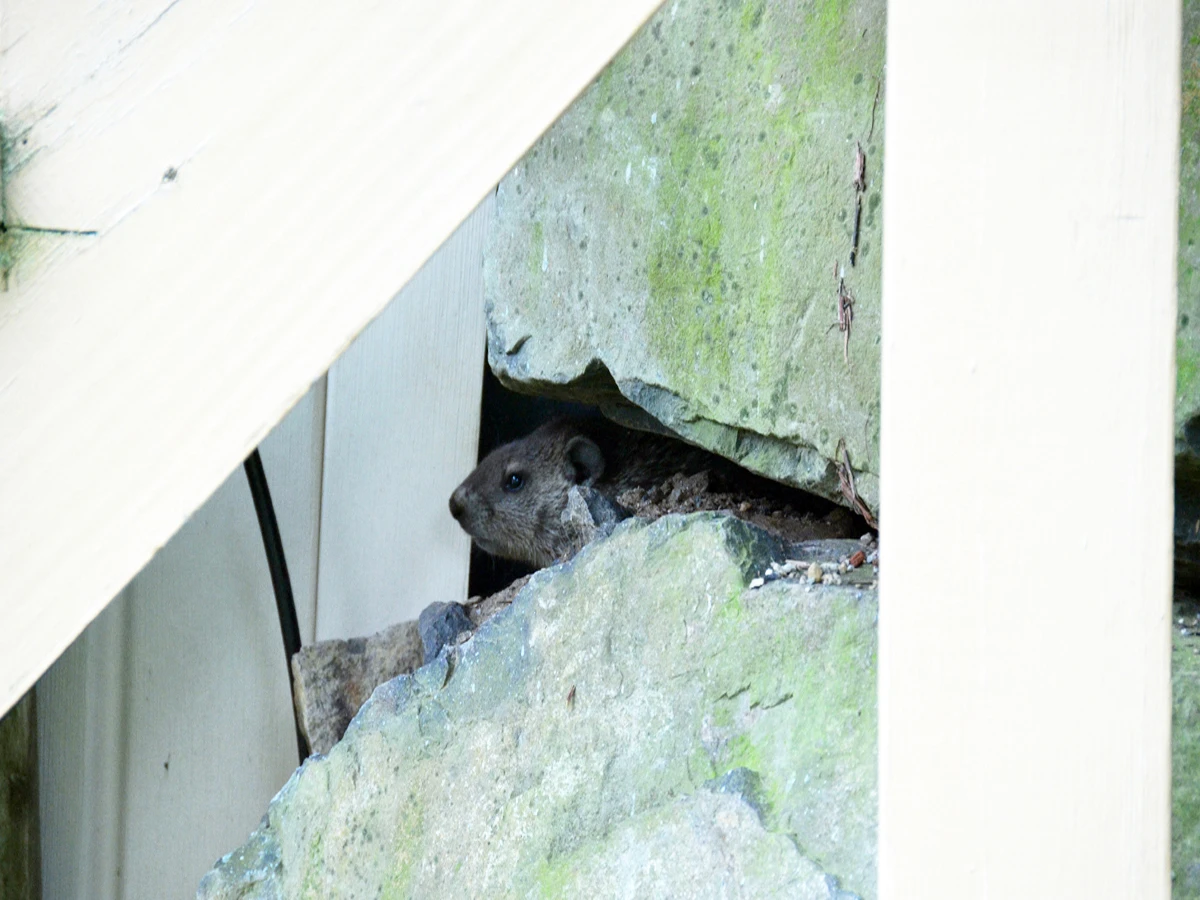
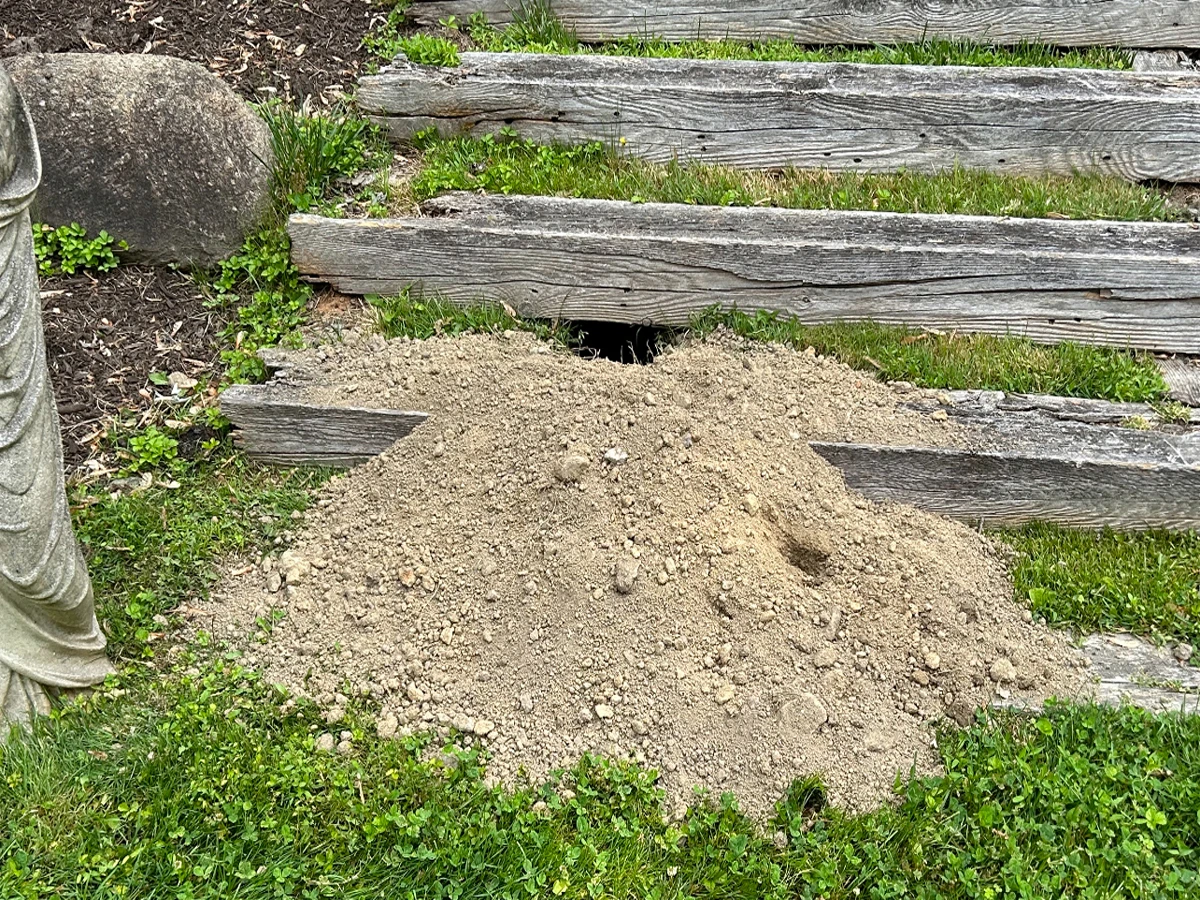
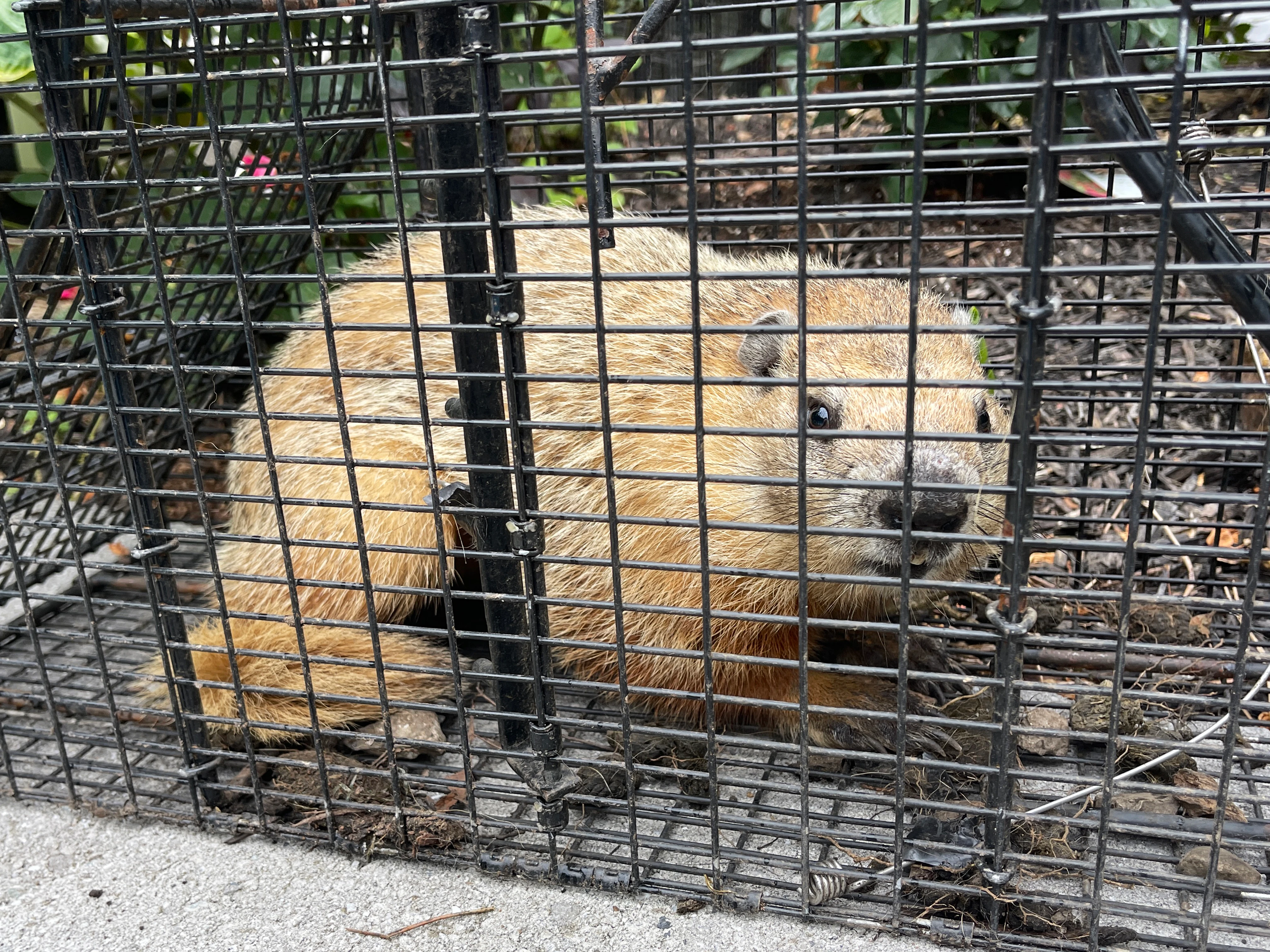
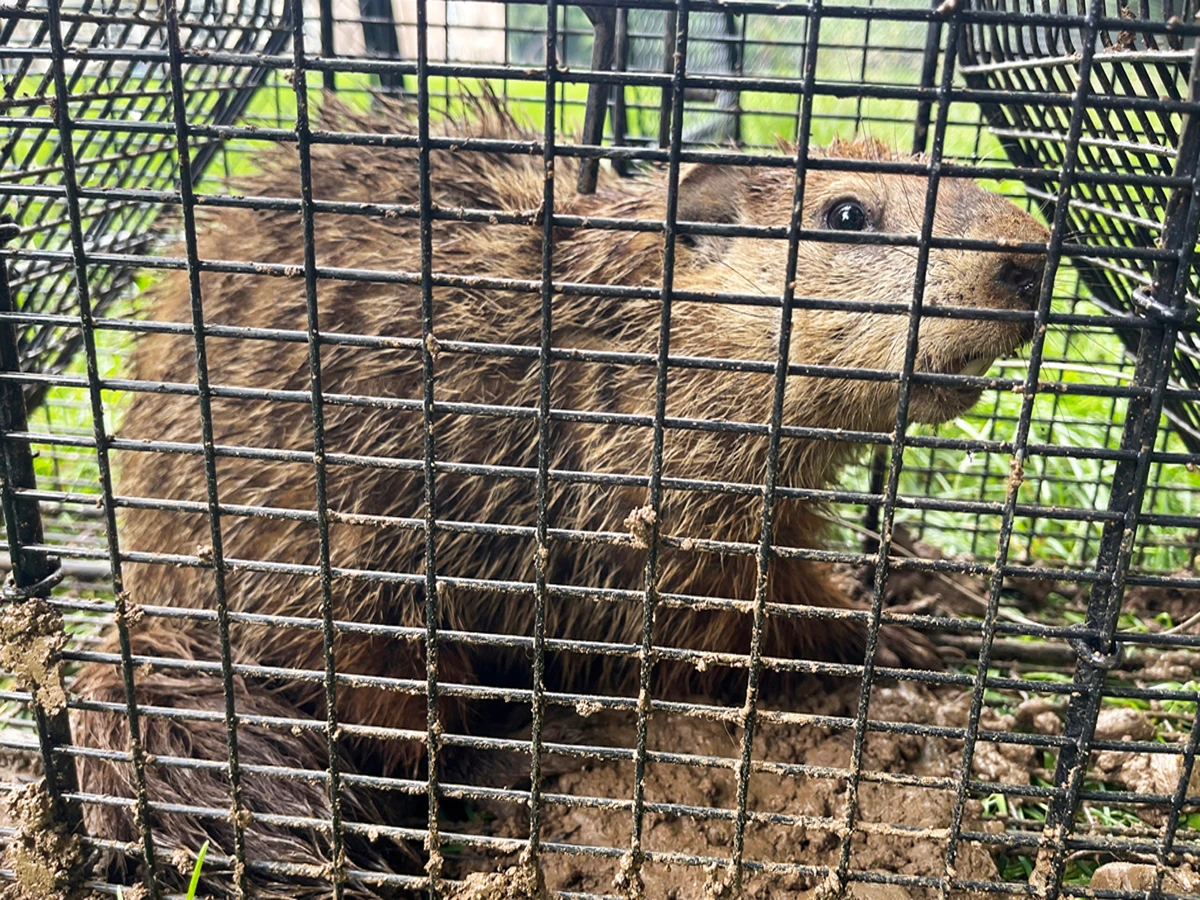
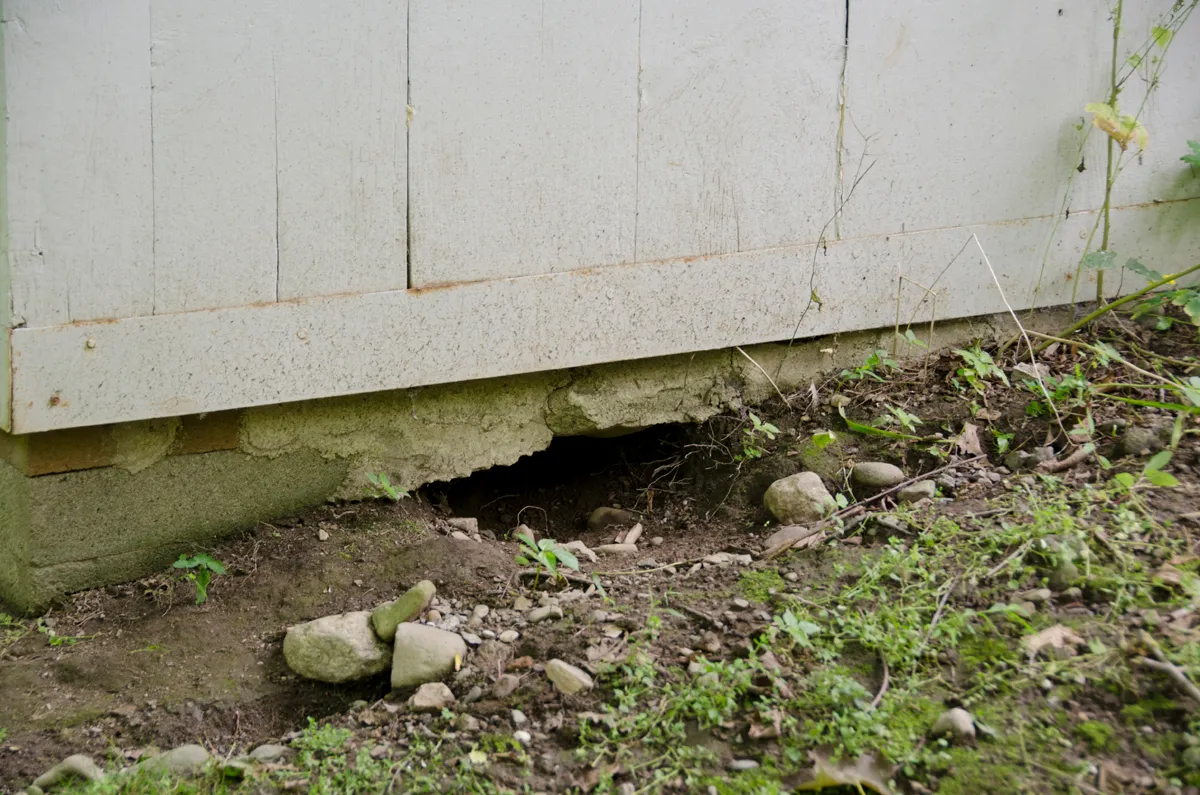
Digging Under House
Yard Damage
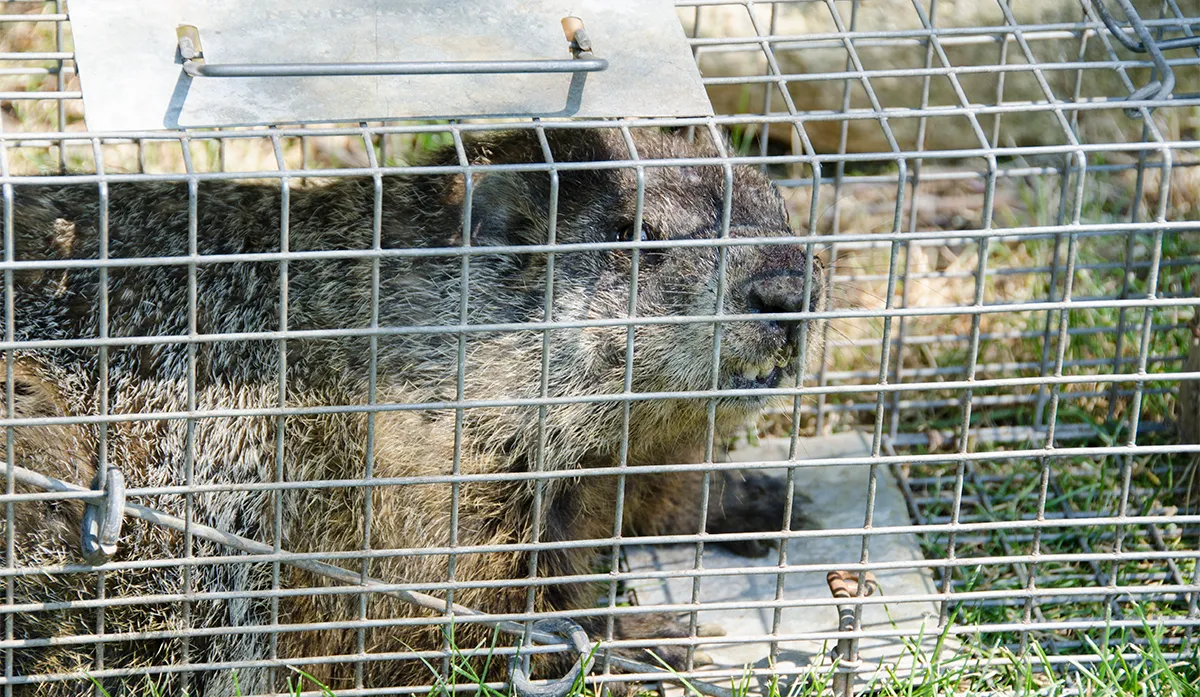
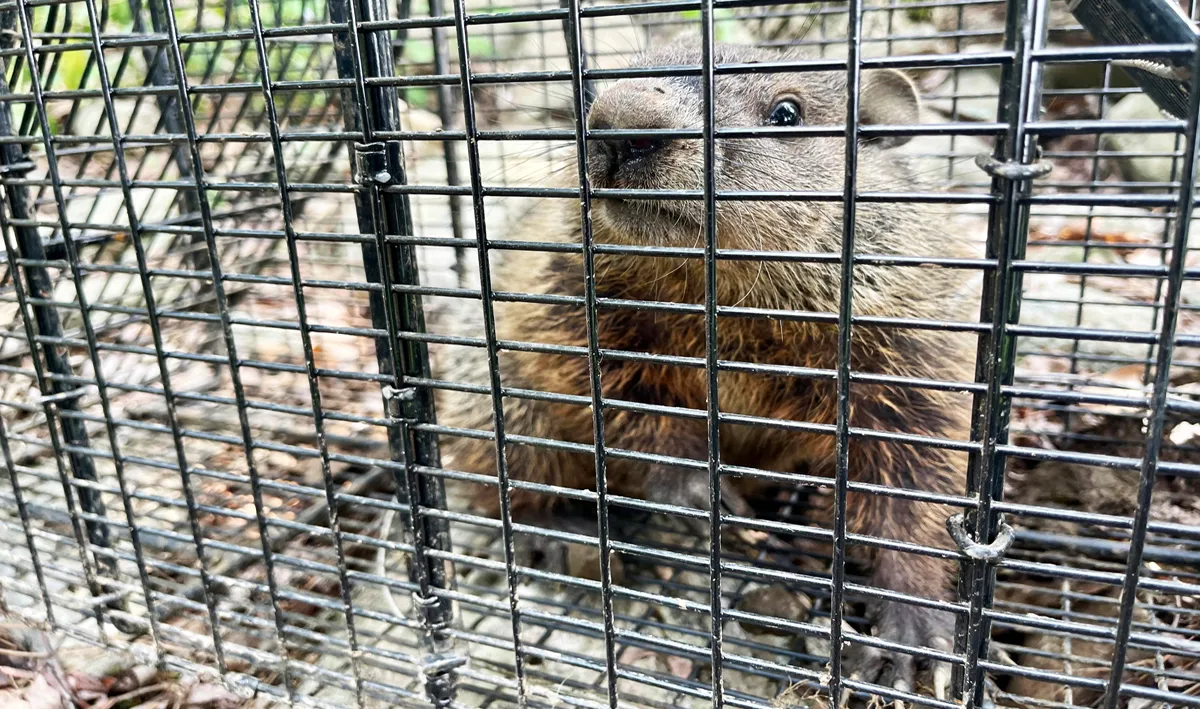
Groundhog Removal Service
Humane Groundhog Trapping
Case Study: Westchester County
A Chappaqua homeowner noticed their flagstone patio was sinking on one side. A groundhog had burrowed directly under the patio and along the foundation wall. The tunnel system extended over 30 feet. We trapped the groundhog, released odor neutralizing canisters inside the burrow, blocked the entrances with compacted gravel and cement, and installed a heavy duty barrier around the patio and foundation perimeter. The patio was releveled and the barrier has held for four years.
Know Your Groundhogs
Biology & Behavior
The Groundhog (Marmota monax), also called a woodchuck, is the largest member of the squirrel family in the northeast. Adults weigh 8 to 14 pounds. They are true hibernators, entering deep sleep from late October through late February.
Groundhogs are diurnal and herbivorous. They are most active in early morning and late afternoon, feeding on clover, alfalfa, garden vegetables, and ornamental plants. They can consume over a pound of vegetation per day.
Their burrow systems are engineering feats. A typical system includes a main entrance with a characteristic dirt mound, one or more escape holes (usually hidden in vegetation), a nesting chamber, and a separate latrine chamber. Tunnels run 2 to 5 feet below grade and can extend 40 feet or more.
Risks & Damage
Foundation Damage, Garden Destruction & Disease
Structural undermining is the primary concern. Groundhog burrows along foundations can cause settling, cracking, and water infiltration. Burrows under patios, sidewalks, and retaining walls cause them to sink and shift. The cost of foundation repair far exceeds the cost of groundhog removal and exclusion.
Garden and landscape damage can be extensive. A single groundhog will destroy a vegetable garden in days. They eat everything from tomatoes to ornamental shrubs. They also gnaw on wooden decks, fence posts, and even underground utility lines.
Groundhog burrows are also used by other animals. Skunks, raccoons, opossums, and rabbits will move into abandoned burrow systems, creating secondary wildlife problems.
As a rabies vector species, groundhogs also carry a risk of becoming rabid.
Seasonal Patterns
Active Season: March Through October
Groundhogs emerge from hibernation in late February or early March. Males immediately begin roaming for mates. Females give birth in April and May to litters of four to six pups. By June, most young are above ground and foraging. This is when garden damage accelerates.
By October, groundhogs begin eating heavily to build fat reserves for hibernation. They retreat underground in late October or November. The best time to trap and exclude is either early spring before pups are born, or in the summer after the young have dispersed.
Long-Term Prevention
Exclusion Barriers & Habitat Modification
Trapping alone does not solve a groundhog problem. If the habitat is attractive, a new groundhog will move in. Sometimes even more dangerous animals, such as raccoons and skunks, will move into groundhog burrows once they are empty. We install permanent barriers around foundations, decks, sheds, and other structures. Our barriers are deep and wide, with an L-shaped footer to prevent digging.
For gardens, we recommend and install buried fence systems that extend below grade. We also advise on habitat modifications that make your property less attractive to groundhogs. It is not advisable to use any deterrents until the groundhogs are gone, as they can make problems significantly worse. However, after the groundhogs are gone and barriers are installed, common sense deterrents can be utilized. Learn more about our full home exclusion service.
"Groundhog was burrowing right along our foundation. Our mason said we needed to deal with it before it got worse. TriState trapped it in two days and installed a barrier around the whole foundation. Problem solved."
Phil C.
Mount Kisco, NY · Westchester County
"Woodchuck ate my entire vegetable garden two years running. TriState removed it and installed a buried fence. First year I actually got tomatoes. Worth every penny."
Nancy W.
Carmel, NY · Putnam County
"Our patio was sinking. The landscaper said a groundhog did it. TriState found the burrow, trapped the groundhogs, and installed protective barriers. We re-leveled the patio and it's never sunk again."
Steve B.
Ramsey, NJ · Bergen County
"Kris came right away and trapped the groundhog and removed him. Then he came back and buried wire all around the shed to prevent any other groundhog from coming back. The work was neat and clean, like he was never there. Outstanding job."
Chris L.
Goshen, NY · Orange County
Common Questions
Groundhog Removal FAQ
We provide a free on-site inspection before quoting. Pricing depends on the number of groundhogs, scope of burrow damage, and exclusion needed. Upfront written estimates with no hidden fees.
Hire a licensed wildlife professional. Groundhogs dig burrows up to 5 feet deep and 60 feet long, often under foundations, patios, or sheds — DIY trapping rarely catches the right animal and never seals the structure. We locate every active burrow entrance, trap the resident groundhog with burrow-targeted methods, and install a buried L-shaped barrier so new groundhogs can't dig in. The work is backed by a 10-year written guarantee.
Yes. Groundhog burrows along foundations can cause settling, cracking, and water infiltration. The tunnels create voids in the soil that undermine the structural support. The sooner groundhogs are trapped, the better.
If you have an established burrow on your property, it is almost guaranteed that new animals will move in if you do not exclude the area after trapping is completed. Sometimes these animals can be worse than groundhogs. Trapping alone is temporary. We install permanent barriers that prevent new groundhogs from digging in, and prevent other types of animals from exploiting empty burrows. All exclusion work is backed by a written guarantee.
Not while the groundhog is still present. They will dig a new entrance. After the groundhog is removed, filling should be done properly with compacted gravel or soil to prevent settling. Though it is extremely difficult to fill or collapse the entire length of a burrow, the access tunnels can and should be filled after the groundhogs are gone.
Yes. Groundhog and woodchuck are two names for the same animal (Marmota monax). They are also sometimes called whistle pigs or land beavers.
No. We use humane live cage traps only. Poison is dangerous to pets, children, and non-target wildlife. It is also illegal in many states to poison groundhogs.